


Purchasing property abroad can be a complex endeavour, especially in a vibrant and competitive market like Barcelona. For international buyers seeking to establish a residence or invest in Catalonia’s capital, this guide offers a thorough overview of what to expect, practical advice, and the steps to follow the process successfully.
Why Choose Barcelona?
Barcelona is widely recognised for its unique blend of Mediterranean climate, rich cultural heritage, modern infrastructure and thriving economy. The city’s real estate market caters to a variety of tastes and budgets, ranging from historic apartments in the Gothic Quarter to luxurious penthouses overlooking the sea. Expats are attracted not only by lifestyle but also by Barcelona’s strategic position as a business hub in Southern Europe.
Appeal to International Buyers
- Safe, cosmopolitan environment with excellent public services
- High rental demand for investment properties, especially in prime districts
- Strong infrastructure including international schools, hospitals and transport
- Favourable climate supporting a healthy lifestyle
However, international buyers must be aware of legal, fiscal, and procedural nuances that differ markedly from their home countries.
Understanding the Real Estate Market in Barcelona
The market in Barcelona offers two main types of properties: new developments and resale properties. Each has advantages and challenges for the foreign buyer:
New Developments
- Offered by developers, often with modern amenities and energy efficiency
- Possibility to buy off-plan with some risks but potential discounts
- Closer compliance with current legislation, such as the recent urban planning laws in Catalonia
Resale Properties
- Typically situated in established neighbourhoods with mature infrastructure
- Potential for negotiating price due to longer time on the market
- Require thorough due diligence to avoid hidden defects or legal encumbrances
Market trends indicate greater demand in central and coastal areas, which affects pricing dynamics accordingly. For detailed insights on neighbourhoods, see our guide on Best Neighbourhoods to Live in Barcelona
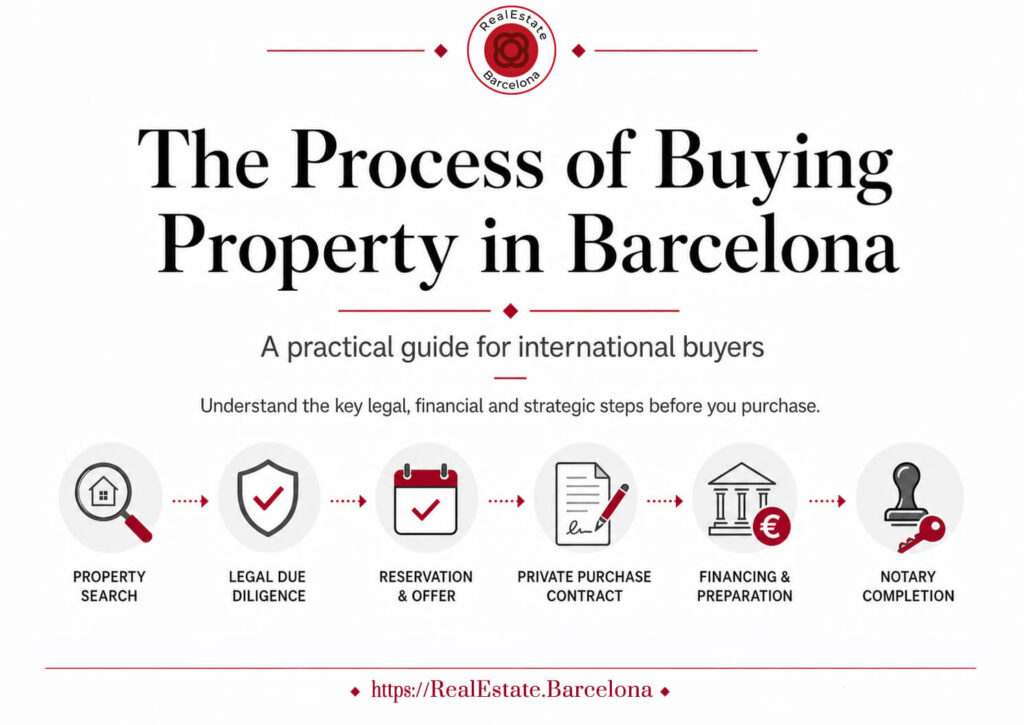
The Buying Process: Step-by-Step
Step 1: Assessing Your Requirements and Budget
Before starting the search, define your priorities: type of property, location, size, and purpose (residence vs investment). It is critical to set a realistic budget that includes purchase price, taxes, fees and potential renovation costs.
Step 2: Financing and Mortgage Options
Expats often need financing from Spanish or international banks. Criteria for mortgage approval include income proof, credit history and the property’s appraised value. Typical mortgages cover 60-80% of the property value.
Step 3: Searching for Properties
Many good opportunities exist off market, accessible only through personal shopper agents or buyer’s agents. Utilizing a buyer’s agent ensures access to comprehensive listings tailored to your needs. You can explore open offers as well, but beware of market saturation and inflated prices in certain segments.
Step 4: Visiting Properties and Evaluating
Physical visits are essential to verify condition, surroundings, and potential issues. Your buyer’s agent will accompany you, highlighting key details and helping you compare options objectively.
Step 5: Making an Offer and Negotiation
Once you identify a suitable property, your agent will assist in structuring a formal offer. Skilled negotiation is crucial to obtain favourable terms without overpaying, factoring in market conditions.
Step 6: Due Diligence and Legal Checks
This is one of the most important phases. A comprehensive check should include:
- Review of the land registry for ownership and possible liens
- Verification of building permits and urban planning status
- Checking for debts linked to the property (community fees, local taxes)
- Confirming compliance with energy efficiency, habitability and safety standards
Engaging a specialised real estate lawyer familiar with Catalan legislation ensures that your interests are fully protected.
Step 7: Signing Contracts
The process typically begins with a Contrato de Arras (earnest money contract) and concludes with the public deed of sale (escritura pública) signed before a Notary.
Step 8: Registration and Transfer of Ownership
Once the deed is signed and taxes are paid, the buyer must register the property in their name at the Land Registry (Registro de la Propiedad).
Legal and Tax Considerations for Expats
Non-Resident or Resident Buyer Status
Your fiscal obligations will depend on your residency status. If you spend more than 183 days yearly in Spain, you are considered a tax resident.
Taxes Related to Property Purchase
- Transfer Tax (ITP): Typically 10% on resale properties in Catalonia
- VAT (IVA): 10% on new properties
- Stamp Duty (AJD): Around 1-1.5% depending on the transaction
- Plusvalía Municipal: A local tax on land value increase, usually paid by the seller
Annual Ownership Taxes
- Property Tax (IBI), set by the City Council
- Non-resident Income Tax on deemed rental value if unoccupied
Understanding these taxes and their timing is essential to budgeting properly. The How to Buy Property in Spain for Foreigners guide provides further details on legal compliance and fiscal duties.
Common Challenges and Practical Tips
Language and Communication
Spanish and Catalan are the official languages. Key documents and negotiations are often conducted in Spanish, so expect some language barriers without professional support.
Unexpected Legal Encumbrances
Some properties may carry unpaid debts or have dubious building permits. Avoid risks by thorough due diligence performed by trusted legal advisors.
Market Volatility
Price fluctuations may occur due to economic factors. Long-term vision and reliable market advice mitigate speculative risks.
Securing the Best Deal
- Engage a personal shopper or buyer’s agent with local market expertise and negotiation skills
- Validate all technical and legal documentation before signing
- Be patient; rushing can lead to oversights
Personal Experience with Expat Buyers in Barcelona
Over the last decade, our three-generation family firm has supported numerous international clients. We have encountered scenarios such as incomplete property documentation, unexpected community debts, and challenges navigating condominium regulations. Our expertise in Catalan real estate law and local market insights has proven invaluable in safeguarding buyers’ interests and ensuring smooth transactions. We particularly emphasise tailored searches to align with each expat’s lifestyle and objectives, enhancing satisfaction beyond mere property acquisition.
Checklist for Expats Buying Property in Barcelona
| Stage | Key Actions | Considerations |
|---|---|---|
| Initial Planning | Define budget, type of property, neighbourhood preferences | Include taxes and fees; research financing options |
| Property Search | Use buyer’s agent; visit properties | Check neighbourhood infrastructure and future developments |
| Offer & Negotiation | Make realistic offers; negotiate conditions | Consider price trends; negotiate inclusions (furnishings, parking) |
| Due Diligence | Check title, debts, permits, urban status | Hire specialised legal counsel; verify energy certificates |
| Contract & Closing | Sign contracts with a notary; pay taxes | Confirm registration; retain copies of all documents |
| Post-Purchase | Settle utilities; register for local taxes | Maintain communication with community and insurance providers |
Neighbourhoods Recommended for Expats
Barcelona’s districts vary greatly in character. Depending on your preferences – whether vibrant urban life, seaside relaxation or family-friendly environments – select accordingly.
- Eixample: Central, elegant Modernist buildings, excellent services
- Gràcia: Bohemian atmosphere, community-oriented
- Barceloneta: Beachfront living, popular among international residents
- Sarrià-Sant Gervasi: Upscale, residential, green areas suitable for families
More in-depth descriptions are available at our article on Best Neighbourhoods to Live in Barcelona.
Financing Options for Expats
Mortgage loans are readily available for foreign buyers, yet the conditions vary:
- Local Spanish banks typically offer 60-70% financing to non-residents
- International private banks can structure specialised lending
- Prepare to submit detailed financial documentation
Consider hiring a mortgage broker familiar with the Barcelona market to optimise offers.
Important Legal Advice
Complying with Catalonian and Spanish real estate laws prevents costly disputes:
- Check for urban planning restrictions, especially in historical zones
- Understand community of property rights if purchasing apartments
- Secure legal counsel during all contract stages
How a Buyer’s Agent Can Help International Clients
Engaging a local buyer’s agent offers essential advantages:
- Access to off-market properties through personal networks
- Objective advice aligned with buyer’s interests, not sellers’ commission-driven pressures
- Support with bilingual communication and document interpretation
- Guidance through complex legal and tax frameworks
- Assistance with negotiation and due diligence
Our firm specialises in representing international buyers relocating to or investing in Barcelona, safeguarding your time, money and peace of mind.
Summary and Final Recommendations
Buying property in Barcelona as an expat combines exciting prospects with essential considerations concerning legal, fiscal and market dynamics. Conduct meticulous planning, engage expert support, and prioritise due diligence to secure a property that meets your expectations and provides long-term value.
For further details on the general purchasing process in Spain, please visit our Complete Guide to Buying Property in Barcelona.
Frequently Asked Q/en/buy-property-barcelona-complete-guide/uestions
Looking to Buy Property in Barcelona?
Connect with an expert buyer agent who specialises in assisting international buyers. Benefit from personalised service and local expertise.

